
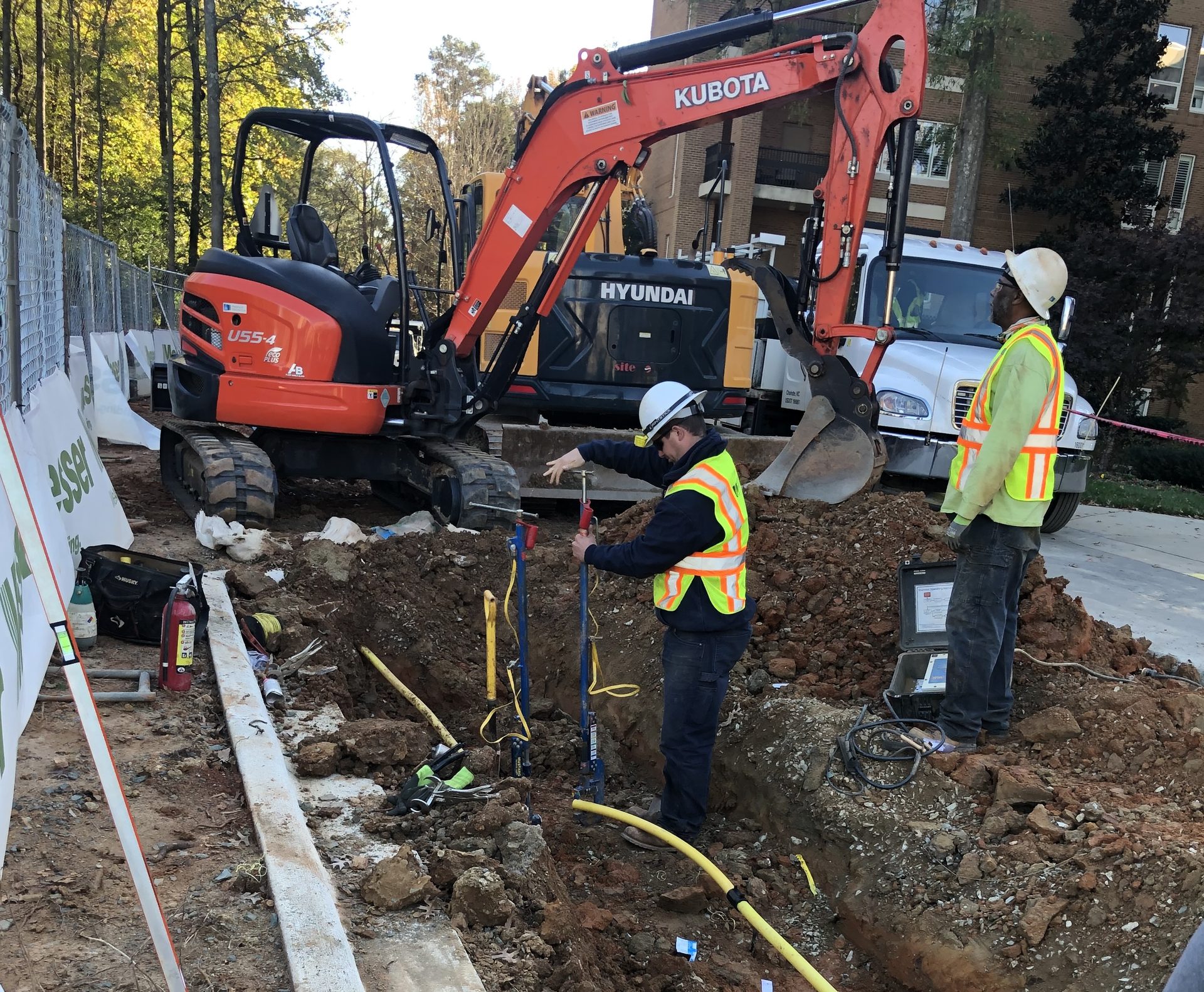
Last month we completed a utility locating project for a commercial development in the Charlotte area. The client had done their due diligence: they had as-built drawings from the original construction, utility records from the city, and even a previous locate report from another company.
They hired us because something felt off. Good instincts.
What the Records Showed
According to the documentation, the site had: - A 6-inch sanitary sewer line running north-south along the property line - An 8-inch water main in the street right-of-way - Electrical service from a transformer on the northwest corner - No gas service to the property
The client was planning to build a new structure in the southeast corner of the site—well away from any documented utilities.
What We Actually Found
Our field work revealed a significantly different picture:
- The sanitary sewer did exist, but it had a lateral running diagonally across the site that wasn't shown on any documents
- An abandoned but still pressurized water line ran directly through the proposed building footprint
- Underground electrical conduits connected the main building to a pump station that had been removed years ago
- Most critically: a 2-inch gas line served a former outdoor heater location—exactly where the new foundation was planned
The Cost of Bad Data
If the client had proceeded based on their existing documentation, they would have: - Hit the gas line during excavation (safety risk and project shutdown) - Discovered the abandoned water line during foundation work (delay and redesign) - Potentially damaged the sewer lateral (environmental issue and repair costs)
Our conservative estimate: $150,000+ in delays, redesign, and emergency repairs avoided.
Why Records Are Wrong
This isn't unusual. As-built documentation is only as good as the information recorded at the time. Things that commonly get missed:
- Temporary utilities that became permanent
- Abandoned utilities that were never removed
- Modifications made after original construction
- Utilities installed by different contractors or utility companies
The question isn't whether your as-builts are accurate—it's how confident you are in betting your project on them.
The Takeaway
Verify, don't assume. Even when you have documentation, field verification is worth the investment. The cost of locating is always less than the cost of a utility strike or a field change order.
If you're planning a project and relying on existing records, ask yourself: when were these records created, and what might have changed since then?
If something feels off on your next project, that’s worth a call before you break ground. Center Line Locating serves the Charlotte area. Reach us at (704) 315-5820 or www.cllocating.com.